Media Report by SG Auto Business & Services: Structural Recovery Emerges in China’s Used Vehicle Market as Compact Vehicle Prices Surge More Than 30% Year-on-Year
April 13, 2026
Original article published by: SG Auto Automotive Business & Services on April 13, 2026
Original article: SG Auto Automotive Business & Services

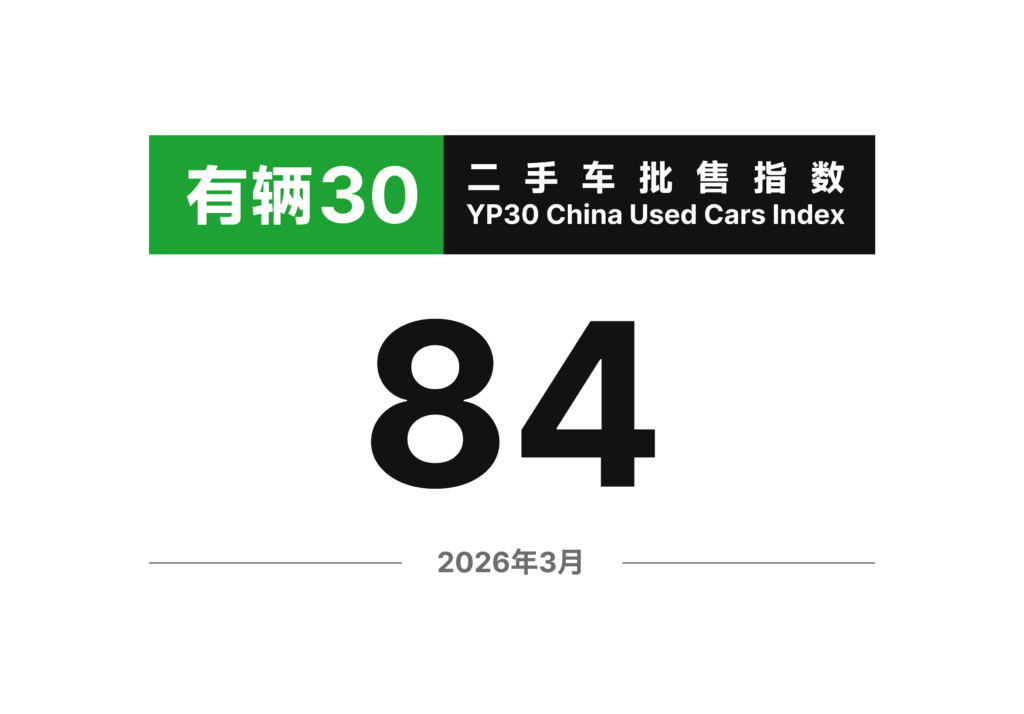
Yoliang 30 Used Vehicle Wholesale Price Index (YP30) recently released its March 2026 data, with the latest index reaching 84 points. Notably, this marks the third consecutive month in 2026 that the index has remained above the key 80-point threshold, indicating a solid start to the first quarter of the year.
In 2025, the index remained below 80 points for eight consecutive months, reflecting sustained pressure on used vehicle wholesale prices. Its stronger performance over the first three months of 2026 not only indicates greater stability at the market’s price floor, but also provides a clear signal that market confidence is gradually strengthening.
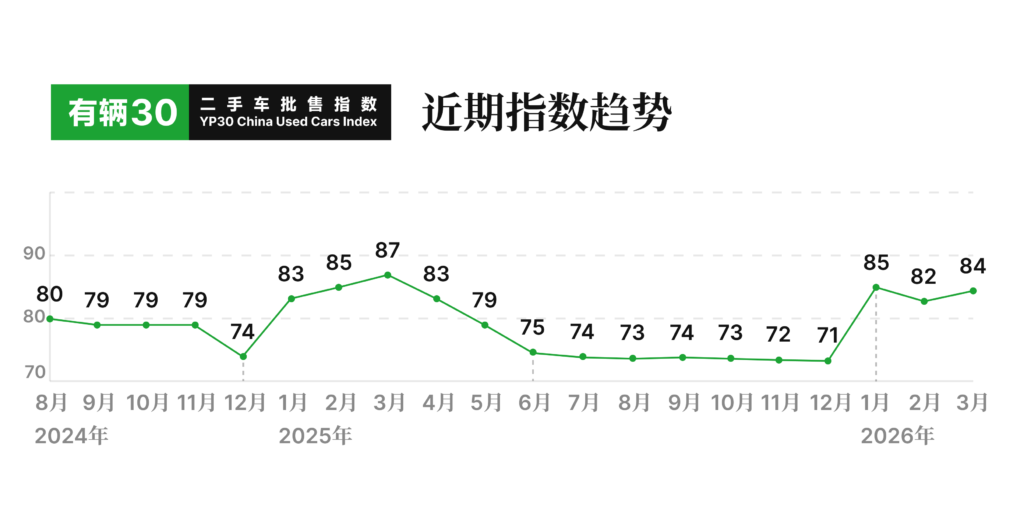
As a widely followed indicator of used vehicle wholesale pricing, the YP30 is based on a large volume of real transaction data. Its movements are increasingly being used as an important reference for assessing trends in China’s used vehicle market.
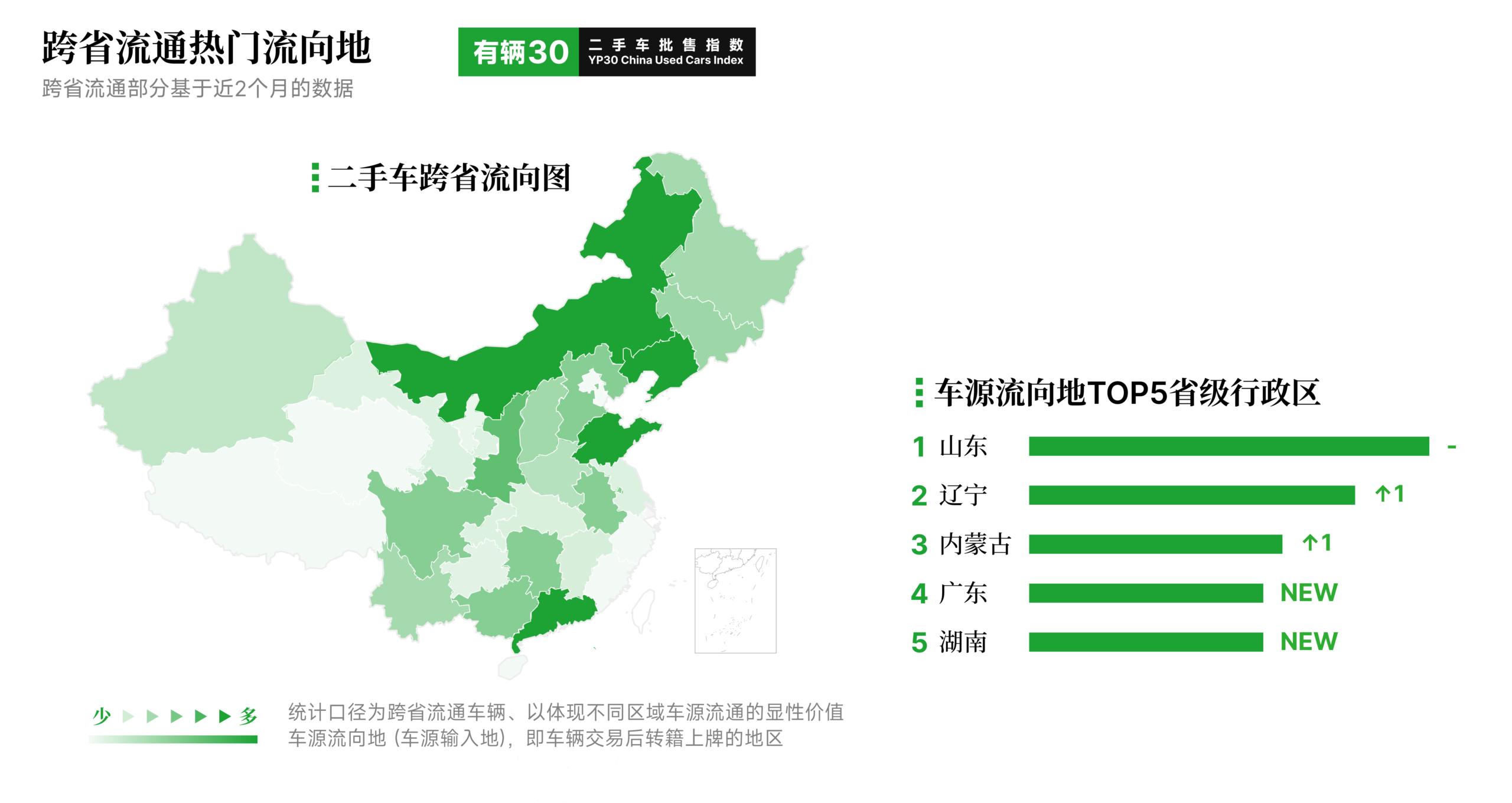
Cross-Regional Vehicle Circulation Highlights Regional Demand Differences
Efficient cross-regional circulation of used vehicles is a key indicator of the maturity and efficiency of a developed used vehicle market.
According to the March data from the YP30, Guangdong continued to rank among China’s major vehicle inflow destinations, supported by its strong end-consumer purchasing power and continued ability to absorb vehicle supply from other regions.
At the same time, Shandong once again ranked first in monthly net interprovincial vehicle inflows. Its strategic location connecting northern and southern China, combined with a mature automotive circulation ecosystem, has reinforced its position as one of the country’s major used vehicle hubs and distribution centers.
The YP30 cross-regional circulation data also provides a differentiated picture of consumer demand across China.
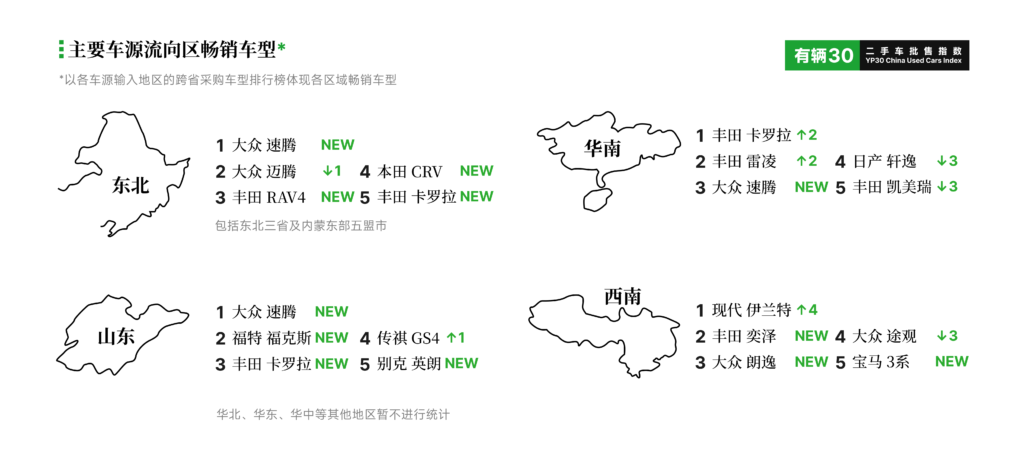
During the first quarter of 2026, consumers in Northeast China showed a preference for sedans from German brands and SUVs from Japanese brands, including the Volkswagen Sagitar and Toyota RAV4. Shandong, as a major vehicle inflow destination, demonstrated strong demand for compact models such as the Volkswagen Sagitar, Ford Focus, and GAC Trumpchi GS4.
Japanese vehicles also continued to see relatively strong demand in South China.
SUV and Sedan Prices Remain Resilient While MPVs Decline
Demand trends varied significantly across major vehicle categories.

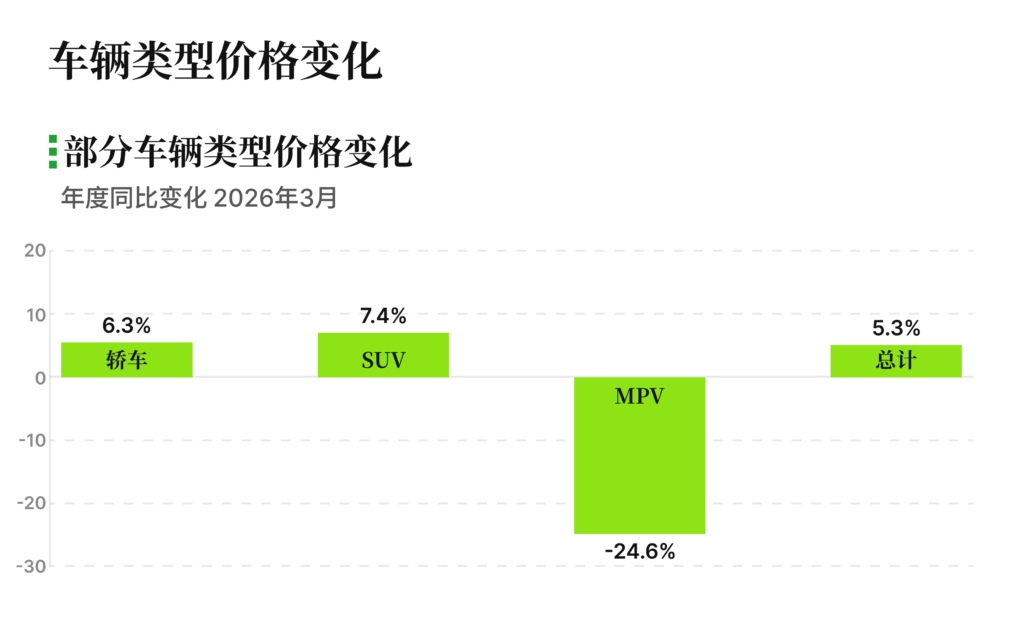
SUVs and sedans remained the dominant segments, with prices increasing 7.4% and 6.3% year-on-year, respectively.
In contrast, MPV prices experienced a significant correction, declining 24.6% year-on-year.
The divergence was even more pronounced across vehicle size segments.

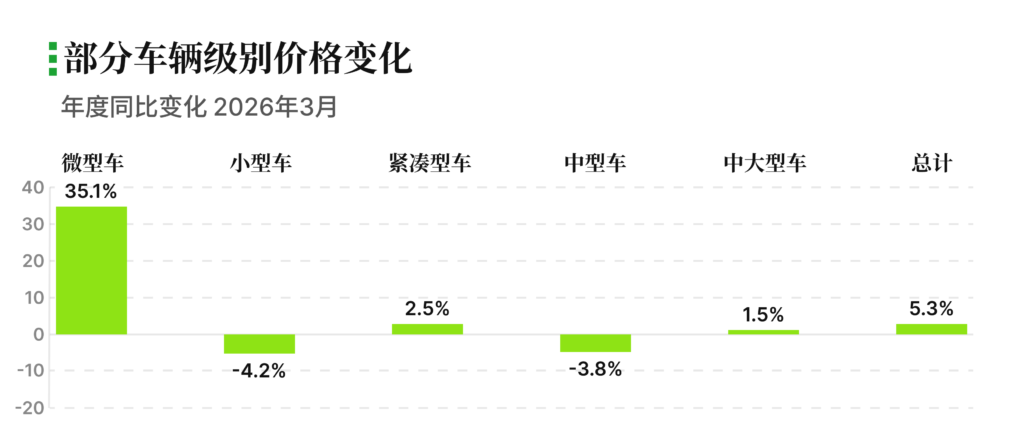
Mini vehicle prices increased 35.1% year-on-year, making them the strongest-performing segment in the March data. This sharp increase may reflect growing demand for highly cost-effective vehicles suited to specific commuting and urban mobility scenarios.
Meanwhile, prices for small and midsize vehicles declined 4.2% and 3.8%, respectively.
The contrasting performance suggests a structural shift in consumer preferences, with demand increasingly concentrating toward different ends of the vehicle-size spectrum.
Chinese Domestic Brands Strengthen Used Vehicle Values
By brand origin, Chinese domestic brands continued to demonstrate strong used vehicle pricing performance.
Prices for Chinese-brand used vehicles increased 13.7% year-on-year, the strongest increase among the major brand-origin categories tracked by the index. The result indicates continued improvement in market recognition and residual-value performance for Chinese automotive brands.
German brands followed with an 8.7% year-on-year increase, demonstrating relatively strong residual-value resilience. Japanese brands recorded a 5.0% increase.
By comparison, Korean-brand used vehicle prices declined 12.6% year-on-year, while American and French brands also experienced varying degrees of decline.
Market Recovery Accompanied by Structural Changes
Taken together, the YP30 and its underlying multidimensional data indicate that China’s used vehicle market continued to consolidate its overall price platform during the first quarter of 2026, while structural changes within the market accelerated.
Three developments stand out:
- Growing recognition of the value of Chinese domestic brands
- Strong performance of the mini vehicle segment
- Continued strengthening of major regional vehicle circulation hubs
Together, these trends provide important signals for industry participants seeking to understand the next stage of China’s used vehicle market.
About the YP30 Used Vehicle Wholesale Price Index
The Yoliang 30 Used Vehicle Wholesale Price Index (YP30) is developed and published by The Yoliang Company, a leading automotive transaction services and used vehicle circulation technology platform in China.
The index is based on Yoliang’s nationwide real-time transaction data. It incorporates a scientific vehicle-age adjustment model and transaction-volume weighting methodology to measure wholesale price movements across 30 mainstream vehicle models representing Chinese, German, Japanese, and American brands.
The index covers widely traded models including the Great Wall Motor Haval H6, BYD Song, BMW 3 Series, Audi A4, Toyota Camry, and Honda CR-V.
Its objective is to provide the used vehicle industry with an objective, continuous, transparent, and comparable benchmark for market pricing.
Building a Data Benchmark for China’s Used Vehicle Industry
The continued publication and development of the YP30 reflects its broader role in building a reliable data benchmark for China’s used vehicle industry.
It also demonstrates The Yoliang Company’s capabilities as a leading Chinese used vehicle transaction platform, particularly in terms of the representativeness of its transaction data and the application of AI-driven data analytics.
Historically, used vehicle pricing in China has relied heavily on individual experience, local market knowledge, and fragmented regional information.
The YP30 converts these traditionally qualitative observations into standardized, traceable, and comparable quantitative indicators.
In a used vehicle market where information asymmetry remains a significant challenge, data that is publicly available, continuously updated, and sufficiently granular can improve market price visibility and enhance the ability of industry participants to anticipate market movements.
The index therefore provides a data reference for immediate transaction decisions as well as medium- and long-term market analysis. It may also serve as a useful empirical reference for policymakers, researchers, and other market participants.
From the perspective of industry development, the growing adoption and reference value of the YP30 reflects a broader transition in China’s used vehicle market—from a traditional model of experience-based pricing toward a more transparent and efficient era of data-driven, rational pricing.
About The Yoliang Company
The Yoliang Company is a leading B2B used vehicle circulation technology company in China, providing trusted, transparent, and technology-driven services to professional used vehicle operators.
Through its digital auction and vehicle circulation infrastructure, Yoliang connects automotive manufacturers, dealership groups, used vehicle dealers, and other industry participants, supporting vehicle inspection, auction, wholesale circulation, trade-in operations, and cross-regional vehicle transactions.
The company also develops proprietary technologies and data products, including Yoliang SmartCheck, PowerBid, and the YP30 Used Vehicle Wholesale Price Index, to improve vehicle-condition transparency, transaction efficiency, pricing intelligence, and operational decision-making across China’s used vehicle industry.
Translation Disclaimer
This English version is a translation of the original Chinese-language article published by SG Auto Automotive Business & Services on April 13, 2026.
It is provided for reference and international communication purposes only. Every effort has been made to accurately convey the content, data, terminology, and meaning of the original Chinese article.
In the event of any discrepancy, inconsistency, or ambiguity between this English translation and the original Chinese-language publication, the original Chinese version shall prevail.
This translation should not be construed as an independent English-language publication or as an official legal, regulatory, or statistical interpretation of the original article.